In alpha testing
Murya
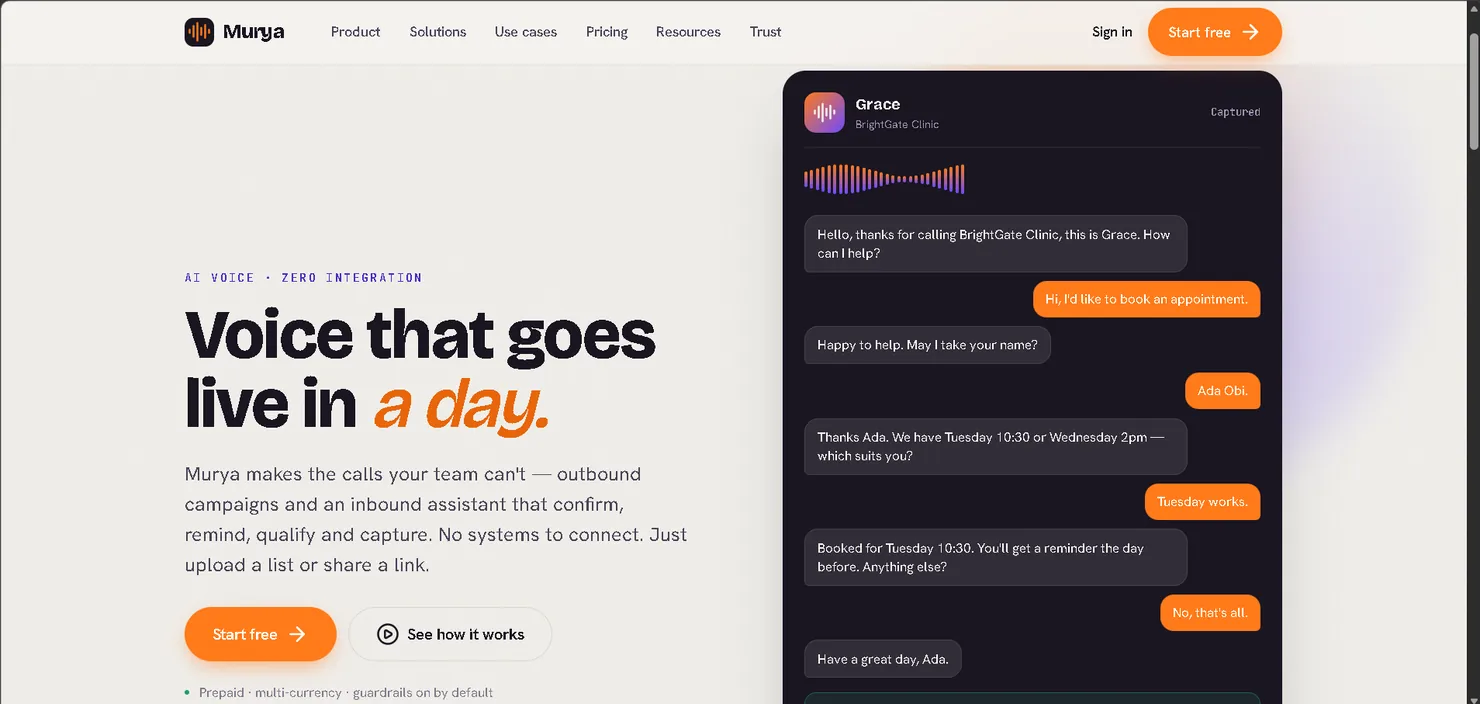
An AI voice platform for inbound assistants and outbound campaigns.
Murya is a multi-tenant AI voice automation platform that helps organizations handle inbound and outbound customer conversations. Its zero-integration-first approach lets businesses configure assistants and get started with documents or contact lists, then connect external systems when a workflow requires live data or actions. My work covers the backend architecture, conversational engine and the supporting services that make these workflows operable.
An AI voice platform in alpha testing
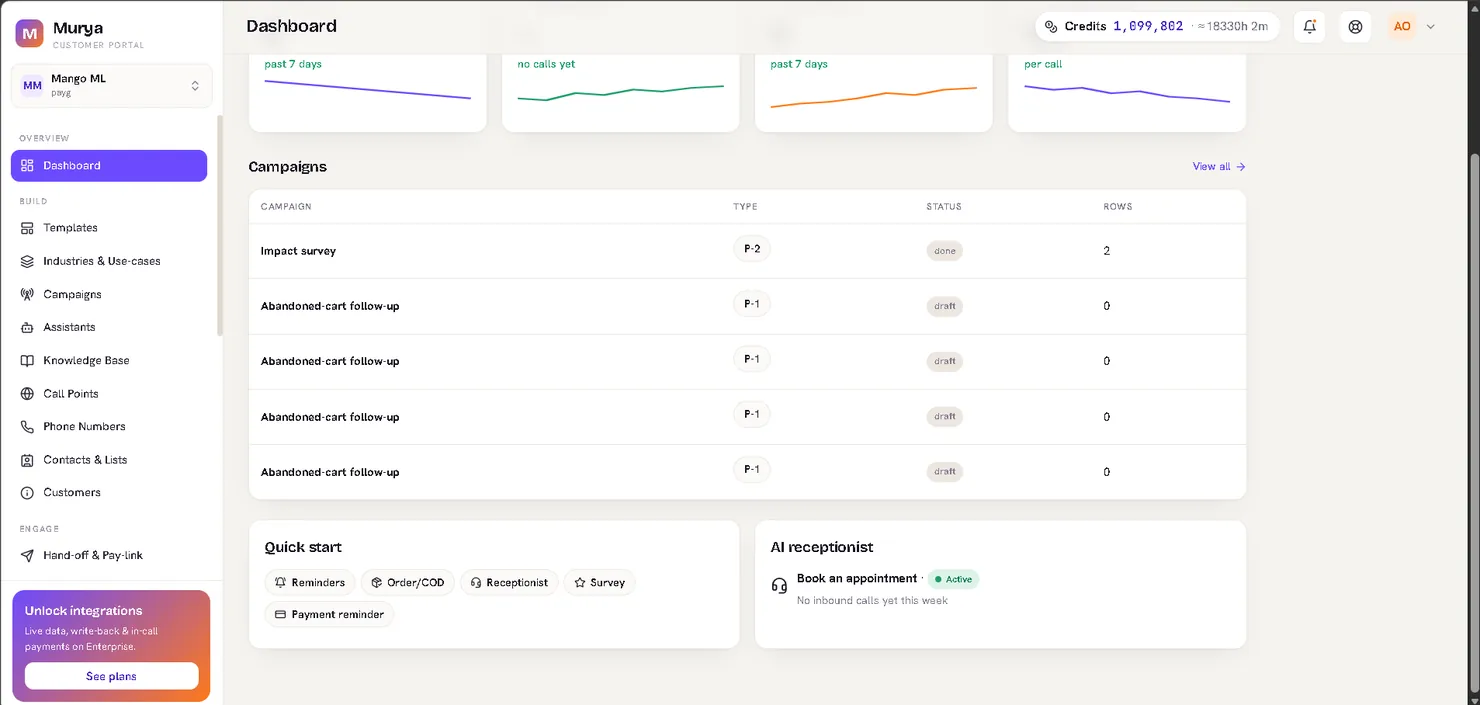
The product is in alpha testing. It is designed around assistant configuration, business knowledge, inbound call points, outbound campaigns, call records, and operational controls. Separately, the conversational engine reached up to 1,000 concurrent conversations in load tests.
My contribution
- Designed and built backend services and APIs for assistant configuration, campaigns, calls, knowledge, and operational workflows.
- Designed multi-tenant backend services with organization-level access controls and clear separation of platform responsibilities.
- Built real-time conversational orchestration and provider integrations, with a load-tested engine supporting up to 1,000 concurrent conversations.
- Defined service boundaries for phone-number management and voice-provider integrations.
- Separated latency-sensitive voice work from scheduled and retryable operations handled by background workers.
Architecture and technical decisions
Murya follows a zero-integration-first approach: businesses can get started with contact lists and documents, then connect external systems as their needs grow. I shaped the backend around clear responsibilities for assistants, campaigns and call workflows. A provider abstraction supports both third-party voice services and the internally developed conversational engine, while dedicated services handle phone-number operations. Redis and Celery support scheduling and background processing.
- Upload contacts or documents
- Configure inbound or outbound assistant
- Run calls, review records and outcomes